
On Stage and On Brand: How Event Furniture Became a Design Statement

By Patrick Crosson, CMP, DES, President

At a tech company’s sales kickoff, we placed a row of Sheridan Stools on stage. The room was filled with sales leaders ready to hear what came next for the business. Furniture probably wasn’t the first thing on their minds.
But in the photographs the marketing team shared throughout the following quarter, those stools had a recurring role.
That’s the thing about stage furniture: it becomes part of the picture. Literally.
When planning corporate event design, it’s easy to give the screen, lighting, and backdrop the first round of attention. The pieces your speakers sit on deserve a place in that conversation, too. Their shape, color, and scale help bring the whole setting together—and give your brand another way to show up.
Your Brand Has a Seat on Stage
A stage sets the tone before anyone reaches for a microphone.
Clean lines can create a polished, contemporary feel. Soft upholstery can make a conversation feel more inviting. A sculptural table can add personality to a simple backdrop. The right combination helps the space feel connected to the company hosting it.
And that design has a life beyond the room.
Panel photographs, LinkedIn posts, and recap videos carry your stage into the weeks and months that follow. Thoughtfully chosen furniture contributes to a setting that feels cohesive in person and on camera.
It’s a relatively small part of the overall event with a very visible role.
Start With the Conversation, Then Choose the Chairs
“Six panelists, six chairs” is a useful starting point. There’s more to consider before choosing the pieces.
What kind of conversation are you creating? A relaxed fireside chat might call for lounge seating and a well-placed side table. A fast-moving panel might benefit from stools that keep speakers upright and visible.
Then consider the setting:
Backdrop: How do the furniture’s colors, materials, and silhouettes work with the set?
Sightlines: Can guests comfortably see the speakers from the back of the room?
Comfort: Will the seating support the length and format of the session?
Spacing: Can speakers move easily, settle in, and reach their water?
Photography: Do the pieces frame the speakers without competing for attention?
These details help turn a furniture order into a thoughtful design. They also make the stage easier to use for the people sitting on it.
A Little Living-Room Energy, on a Larger Stage

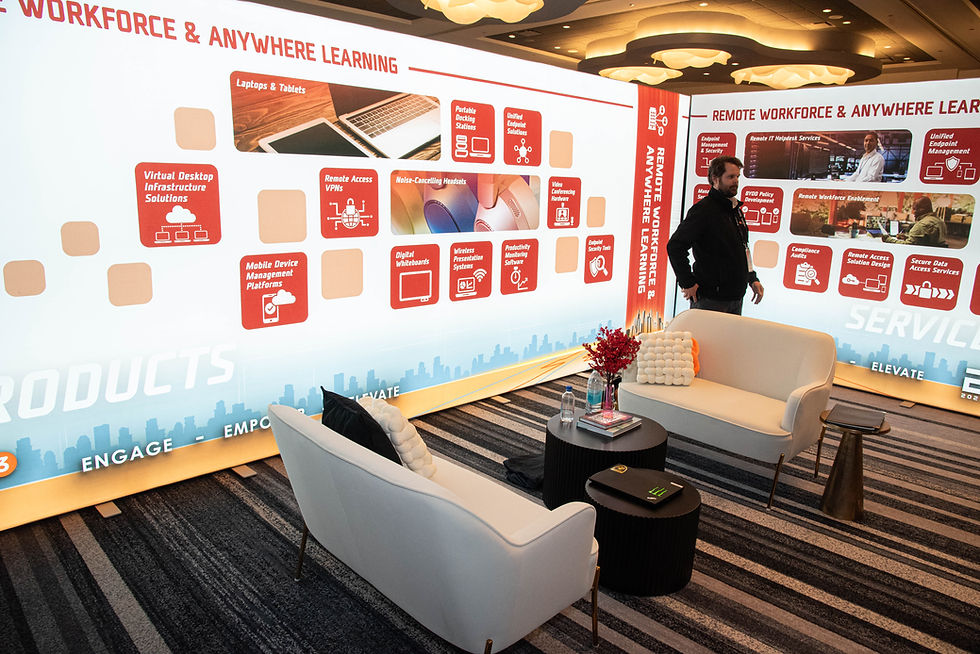
At ILEA Live 2026 in Chicago, Curated was one of the rental partners helping bring the stage at Venue SIX10 to life.
For an audience of event professionals, the setting was part of the experience. Furniture was selected in relation to the backdrop and lighting, creating a living-room-inspired stage that invited conversation.
The pieces worked together through proportion, placement, and a shared design direction. Seating supported the sightlines, while the overall arrangement gave speakers room to connect.
That same attention extended beyond the stage. A Tribune Bar and Tribune Stools at the back of the room created another place for attendees to gather and keep the conversation going.
Because a considered event space should feel connected from front to back.
Thoughtful Rentals, Fresh Possibilities
A distinctive stage doesn’t have to start with custom-built furniture.
Rental pieces can take on a fresh identity through a different backdrop, a new pairing, or a thoughtful layer of styling. A familiar chair can feel entirely different beside warm wood, bold graphics, or a richly textured pillow.
That flexibility is part of what we love about rentals: beautiful pieces get another moment in the spotlight, while planners get room to create something specific to their event.
Give Your Rental Partner the Whole Picture
The most useful brief goes beyond quantities.
Share your run of show, room and stage dimensions, set design, and brand guidelines. Add camera positions if you have them, along with your budget and any pieces you already plan to use.
And tell us how you want the space to feel. Polished and focused? Warm and conversational? A little unexpected?
That direction helps us recommend pieces that belong together—and belong at your event.
For your next Chicago program, bring Curated your stage concept, your inspiration, or the beginnings of an idea. We’ll help you find the furniture that brings it into focus.
Let’s create a space worth gathering in.
Frequently Asked Questions
What is corporate event design, exactly?
It is the set of decisions about what a room does: where people sit, where they stand, what the camera sees, and what the space says about the company hosting it. Furniture is the largest physical part of it, which is why it deserves a place early in the plan.
Does furniture affect how a corporate event is perceived?
It shapes how the room photographs and how long people stay in it. A considered stage reads as deliberate in every photo that leaves the room, and the audience takes that in without thinking about it.
How far ahead should I brief a rental partner for a conference?
We recommend booking at least 4-6 weeks in advance for larger events and 2-3 weeks for smaller gatherings. However, we will accommodate last-minute requests based on availability. For an event with a stage, brief earlier still, because stage pieces are chosen against the set and the lighting.
What should I send a rental partner when I brief them?
The agenda, the room dimensions, the stage or set design if one exists, and your brand guidelines. Those four documents answer most of the questions a partner would otherwise have to ask, and they change which pieces get proposed.
About the Author
Patrick Crosson, CMP, DES, is President of Curated Rentals and founder of PC Events + Experiences, a 2025 Inc. 5000 honoree. A multiple ILEA Spark Award winner, he has spent more than 15 years producing corporate, association and nonprofit events.


Comments